Jon Gallant: hearing the bass as a separate voice
Attack, movement and collaboration matter as much as the low register.
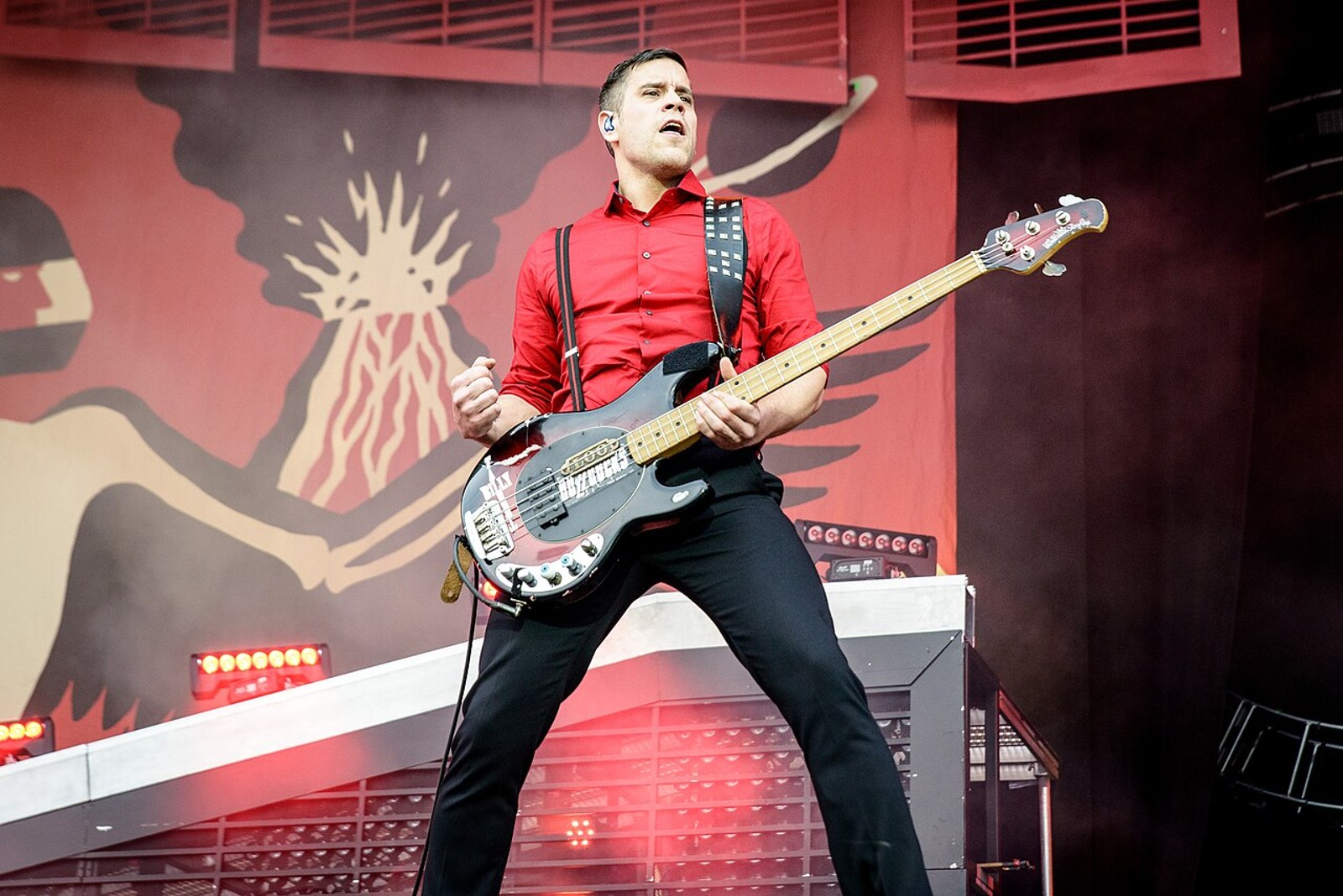
Calling Jon Gallant Billy Talent's bassist identifies his position without explaining it. Bass often occupies the part of a recording that listeners feel as a combined physical foundation. Its particular movement can consequently disappear behind attention to the singer and guitarist. A useful portrait begins where that general foundation becomes an individual musical contribution.
In a December 2006 interview with Mike Bax, Gallant described mainly playing with his fingers at that time. He had used a pick for the texture of some first-album recordings, while the second album used fingers. He also described learning Ian D'Sa's guitar ideas and adding bass parts as songs developed. Those remarks document that period of work, rather than establishing a rule for every later recording.
The beginning of a note changes the movement
Fingers and a pick are not a hierarchy of authentic and inauthentic bass playing. They offer different ways to articulate an attack. How clearly a note begins, how long it lasts and how it connects to the next one all influence the rhythmic picture. A low part is therefore more than a sequence of pitches. It has articulation of its own, much as emphasis changes the delivery of a spoken sentence.
The working process Gallant described also shows why an existing guitar idea does not completely determine the bass part. Bass can support a movement, connect sections or create stillness at a particular moment. The actual choice must be examined in the individual piece. A general possibility is not evidence for a particular note in a recording.
To follow his contribution more closely, start between vocal lines, when language makes fewer demands on your attention. Listen for whether the lower notes preserve their rhythm or mark a transition. Then revisit the same passage while following the singer. Switching between those tasks can reveal why an initially unobtrusive part matters to the flow of the whole.
Bass does not need to attract attention constantly to perform that job. Repetition can provide orientation while other elements change. Conversely, a conspicuous figure is not automatically more important than a restrained one. Its function in context matters. Volume, musical significance and visibility on stage are different things, although short descriptions of bands often collapse them into one.
Gallant's interview is not a universal blueprint for Billy Talent bass lines. It offers a specific connection between tonal choice and collaborative development. From there, his playing can be understood as active shaping rather than simply occupying a register below the guitar: decisions about attack, duration and movement help make an arrangement work. Reconstructing a particular technique would require additional evidence, but attentive listening is enough to begin understanding the relationship.