Ian D'Sa: guitarist and record-maker
A guitar part and a production decision examine the same song at different distances.
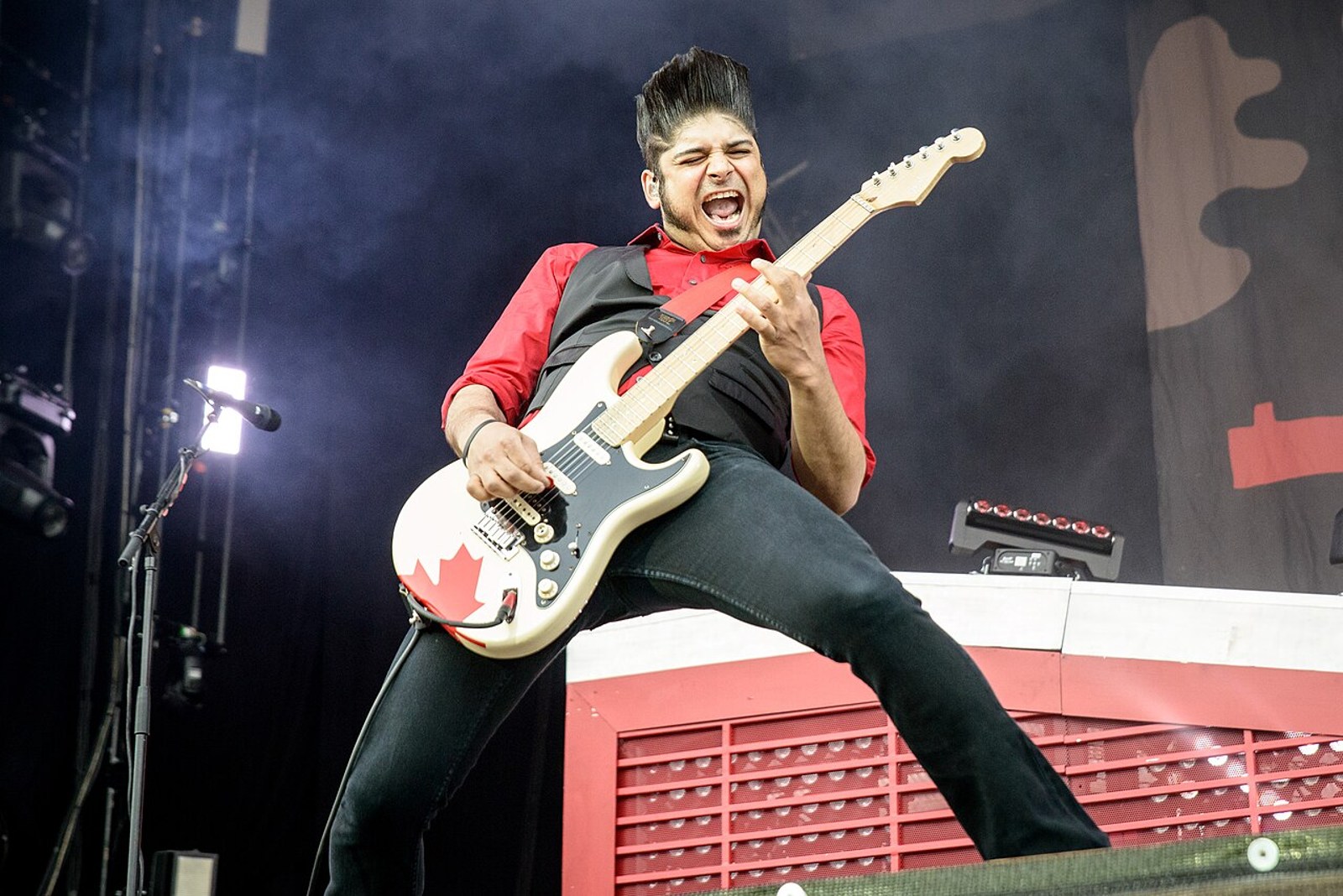
Introducing Ian D'Sa as Billy Talent's guitarist leaves an important part of his musical work outside the frame. An instrumental part answers what one person plays. Shaping a recording also concerns that part's relationship with everything else: what stays forward, what can be added, and which idea needs space. Those perspectives can support each other, but they do not always suggest the same decision.
Speaking to Pollstar in July 2016, D'Sa described learning guitar by repeatedly listening to records. He also discussed the selective use of synthesizers on Afraid of Heights as an extension of the band's guitar-based sound. Together, those details point to attentive learning from sound and a willingness to consider additional colours within an established group.
A strong figure still needs a setting
A guitar figure can work convincingly alone and still occupy too much space in a full arrangement. Collaboration concerns more than choosing the right notes. Register, duration and the timing of an entrance matter too. A note that rings attractively on its own might obscure the ending of a vocal line. A deliberately empty space can communicate more clearly than another movement.
This is why guitar playing and production need not occupy separate worlds. The player's perspective follows a movement from within. The producer's perspective asks whether that movement remains intelligible in the whole. Removing something can be as deliberate a choice as making a figure more elaborate. The finished recording, however, does not automatically reveal who proposed any particular change in the studio.
There is also a difference between an idea's identity and its presentation. A recognisable figure might remain essentially the same while its recorded setting changes around it. The balance of accompanying instruments, the amount of space between attacks and the transition into a following section can alter how it feels. This is an analytical possibility, not a claim that any unverified studio process occurred on a specific track.
Additional sounds do not necessarily mean a new line-up
A sound added to a recording does not have to appear as a separate visible instrumental role at a concert. Studio work can use layers and doubling that a stage arrangement organises differently. An unfamiliar sound should not immediately be assigned to a particular device either. Guitars, effects and other instruments can be less easy to distinguish in a dense mix than confident equipment descriptions suggest.
Comparing musical jobs is therefore more useful than guessing at hardware. Does the guitar carry a recurring figure, place isolated accents, or connect sections while the singer pauses? A short passage is enough to explore those questions. The answers need not apply to the entire song; a change of function may be the interesting event.
A production credit should not become a complete explanation of a record's sound. It identifies a responsibility, not every individual decision or conversation. An initial idea, its performance and the finished master belong to different stages of work. Understanding those distinctions reveals more about D'Sa's overlapping roles than treating one name as an explanation for every audible feature.
The resulting portrait is more specific, not smaller: a guitarist whose attention extends beyond his own instrumental track. His documented discussion of learning and expanding the sound provides a concrete starting point. The records then invite listeners to consider continuity and change without treating every additional detail as a rejection of the band's identity.