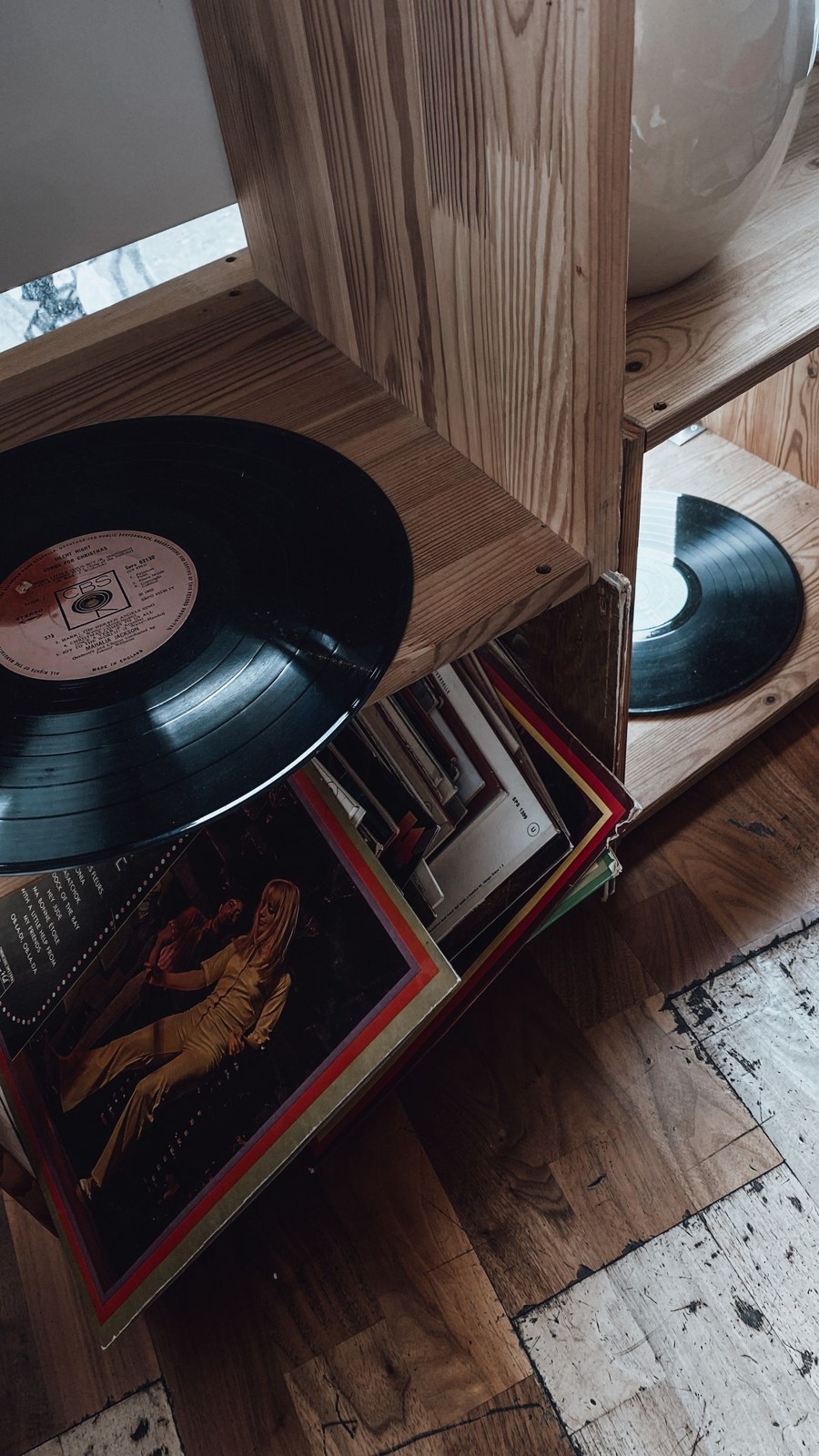
Live at Frankfurt on vinyl: reading the four sides
Physical divisions create listening sections without proving new facts about the concert.

A double LP is not simply a digital track list in larger packaging. It distributes listening across four sides and requires an action between them: turn over or change the record. For Live at Festhalle Frankfurt, the official product description makes that structure explicit. The musical sequence remains connected while the medium introduces additional pauses.
The linked vinyl edition lists 21 tracks, distributed as six on side A, five on B, six on C and four on D. Their opening tracks are respectively Devil in a Midnight Mass, Try Honesty, Diamond on a Landmine and Fallen Leaves. Red Flag closes the fourth side. These details describe the published arrangement, not every aspect of the original concert's running order.
A side opening is not a concert opening
Only the release's first track starts the complete record. Later side openings receive additional emphasis from the format. Restarting after a turn creates a smaller point of entry into the recording. It does not establish that the band paused there or announced a new concert section. The product list provides no evidence for that claim.
A side ending does not necessarily mark the musical conclusion of a section either. Your action introduces a pause even if the sequence continues in your mind. That interruption may change how adjacent tracks feel. A song that follows immediately in digital playback might receive renewed attention after changing records. This is an effect of your listening situation, not a newly discovered property of the performance.
Four manageable listening sessions
Play the complete double album or begin with one side. The smaller unit offers a manageable comparison: notice its entrance, changes in attention and the ending of its final track. Do not infer an exact playing time from track count. Four longer recordings can take more time than several shorter ones; the number alone cannot decide.
If you later use a digital sequence, compare the transitions at those side breaks. Not every digital edition necessarily includes identical additions or presentation, so begin with the specific track list. First establish that you are examining the same sequence. Then consider how the absence of a record change affects your own listening flow.
For the physical collection, the labels on both records matter too. Identify the sides from those markings rather than only their position in the sleeve. It is easy to reverse an order when several components have been removed together. Printed information is more reliable than assuming that whichever record lies on the left always comes first.
A useful private note might record the closing title of one side beside the opening title of the next. This is not a proposed replacement setlist. It simply identifies where your playback routine intervenes. Returning to those points later can reveal whether your memory groups the album by musical transitions or by the places where you physically stopped.
The four-sided structure gives the object a rhythm of use. It need not be better or worse than uninterrupted playback. The interesting exercise is to recognise the additional pause and distinguish it from the documented performance. That keeps the comparison concrete: a particular release, a particular format and an identifiable difference in the act of listening.