Prisoners of Today: an album track with more than one voice
Published credits help place the debut's tenth song beyond a frontman-only account.

Prisoners of Today is the tenth track on the first Billy Talent album. It is also among the debut songs Jon Gallant named as personal favourites in an interview with The AU Review. This makes it a useful counterexample to a memory of the record reduced to singles. Its significance to one participant can be documented without turning that preference into a universal ranking or making claims about every listener's response.
More than one person behind the visible lead
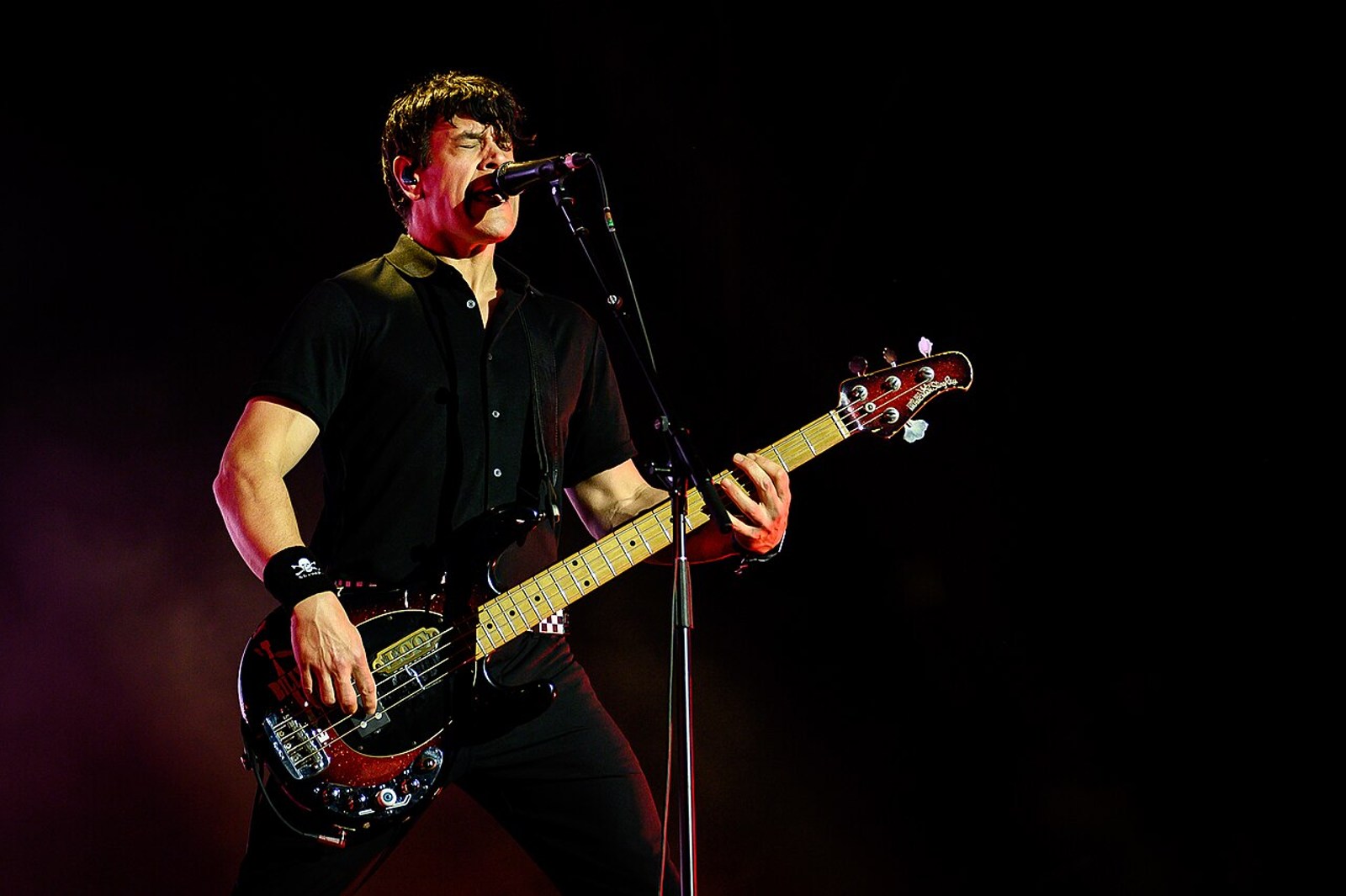
The rights-holder-supplied release on the official YouTube channel credits Ben Kowalewicz with lead vocals, Ian D'Sa with guitar and backing vocals, Jonathan Gallant with bass and backing vocals, and Aaron Solowoniuk with drums. These details do not describe every entrance. They do explain why an article should not automatically attribute every audible voice or musical decision to the lead singer.
Lead and supporting voices can fulfil different functions in a band recording. Another voice might reinforce a passage, create contrast or change its emphasis. Whether and where that happens must be checked against the actual recording. Credits identify participants rather than providing a second-by-second map. That limit is precisely what makes them useful: they supply dependable names without pretending to substitute for an experience of listening.
Production and interpretation are different activities
The published details also identify Gavin Brown as producer and Chris Lord-Alge for mixing. These are separate roles. A producer credit does not mean that person independently determined every musical detail; a mixing credit does not mean an instrument was played in the studio at the relative level heard in the final result. A recording presents shared work through deliberate choices. It is not an unaltered window into a rehearsal room.
This suggests reversing a common question. Instead of asking which device must have produced a particular tone, ask which relationship between the audible parts attracts attention. That avoids an unsupported shopping list of supposedly essential equipment. A song selected by a bassist as a favourite can encourage attention to lower movement as well. Gallant's preference does not prove that a particular bass part was the reason he chose it.
A time-related title near the album's end
The title connects confinement with the present. An editorial reading can explore the tension between freedom of action and surrounding circumstances. Today does not automatically make the work a comment on one identifiable political event. It can also establish a broader temporal frame. A specific account of the writing situation would need evidence beyond the combination of those words.
Nothing to Lose follows in the album sequence, before Voices of Violence closes the standard edition. Prisoners of Today therefore begins the final group of three, rather than the record itself. That position gives a reason to hear the closing stretch together. The order can be preserved without constructing one continuous plot across songs that have separate titles and identities.
Finally, distinguish online availability from original release when organising the recording. The official YouTube upload carries a later posting date, while its phonographic copyright notice points to 2003. Both can be correct. A platform date establishes when a particular item was made available there; it does not automatically establish when the work first appeared. Keeping those layers separate produces a more dependable personal discography than assigning every upload its own supposed recording year.