Pocketful of Dreams: wishes in a limited space
An everyday container makes an abstract idea tangible without settling its value.
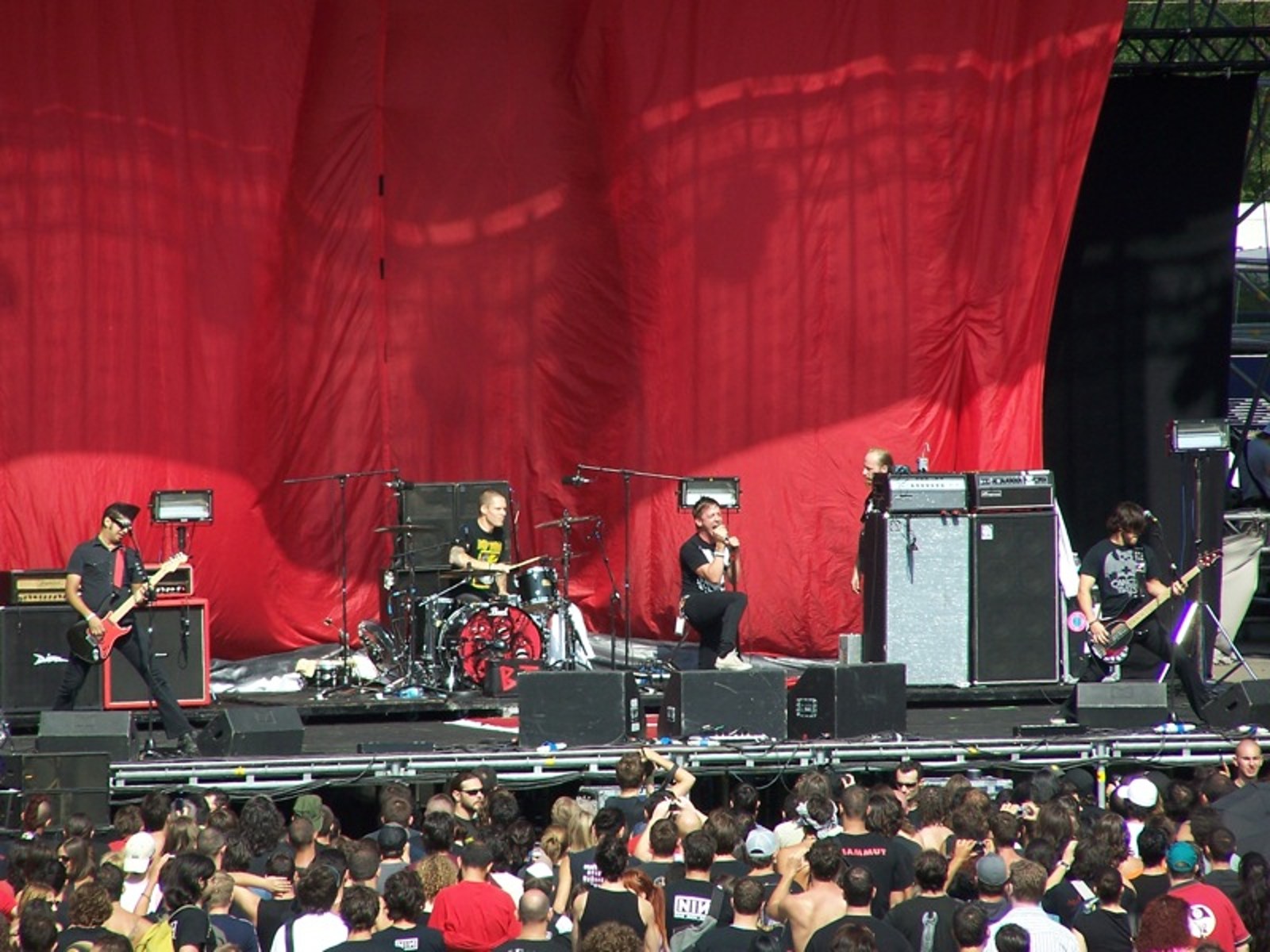
A pocket has boundaries; dreams do not begin with such obvious limits. Pocketful of Dreams, on Billy Talent III, brings those two scales together. The image can sound like possession, but it can also suggest something carried around rather than achieved. That distinction is more useful than immediately classifying the song as motivational. Its name alone does not tell us whether the dreams are achievable, protected, traded or disappointed.
A measure attached to a person
A pocketful is not an exact quantity. It is a measure connected with somebody's clothing and body rather than a statistic. That makes an expansive idea seem portable and ordinary. You might read modesty into the contrast, or the opposite: something without limits being squeezed into a space too small for it. Both are interpretive possibilities that need further support from the work. Neither is presented here as the band's authorised explanation.
The language used around dreams often resembles the language of goods. We are told to pursue them, afford them or buy into them. This title provides an opportunity to examine that habit. A wish can belong to somebody without being tradable, yet describing it as a possession raises the question of who sets its value. That is a route for reflection, not a claim that the song has a specifically verified political programme. The distinction keeps an interesting association from becoming an unsupported fact.
For a listening note, place three ideas beside one another: having something, wanting something and doing something. Which appears to organise your response to the song? The answer may change as it progresses. A movement between imagination and action can explain why an image that initially seems light later raises harder questions. Describe the point that led to your interpretation rather than covering the work with a ready-made lesson about chasing ambitions. An interpretation should remain answerable to what prompted it.
Leave room for more than one meaning of a dream
Dream can refer to an experience during sleep as well as a future hope. Translation can accidentally erase that ambiguity by choosing an explanatory word too soon. If discussing the title in another language, retain the uncertainty until the surrounding material gives you a reason to narrow it. Fan commentary does not become more precise simply by converting every open phrase into a definitive statement. Sometimes precision means identifying exactly what has not yet been established.
Try a modest comparison with White Sparrows. Both names invoke something that can be imagined on a small physical scale, but only one explicitly joins it to an abstraction. Hear the two songs separately and ask afterwards whether those images actually shaped your response. If another aspect of the music mattered more, record that correction. A productive experiment should be allowed to disagree with its own starting idea; otherwise a clever title reading can take over the whole encounter.