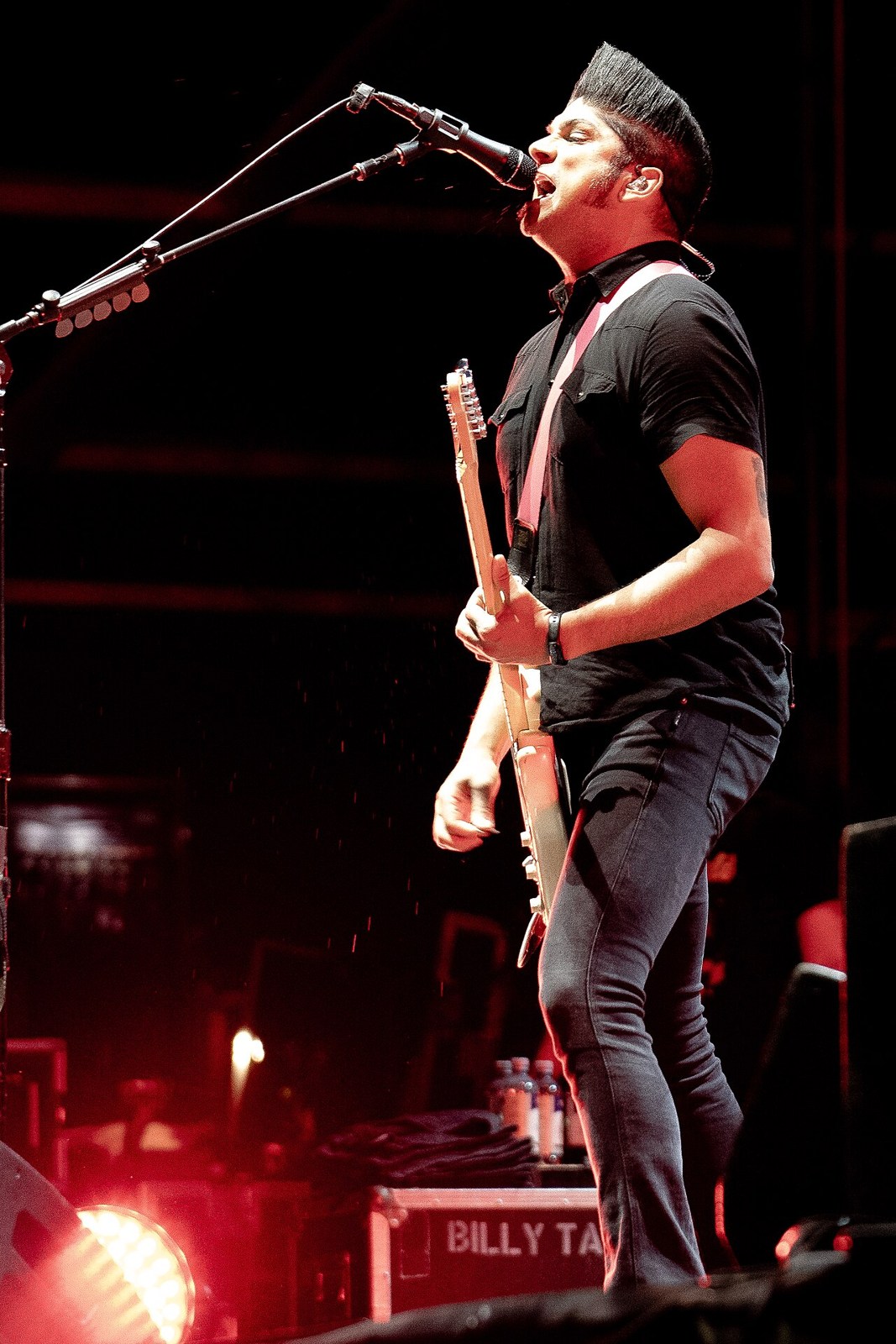
Follow the guitar while the voice keeps going
A short exercise using Try Honesty and Red Flag, without notation or isolated tracks.

A voice often provides the easiest route through a song. Words and melody establish a line that attention follows almost automatically. To hear the guitar more deliberately, you do not have to remove the singer from the recording. Start by changing the task instead. Try Honesty and Red Flag are possible starting selections from the Billy Talent catalogue; the exercise does not prescribe which specific details you must find in either one.
Choose a stretch, not an entire song
Select a short passage beginning before a vocal entrance and continuing a little beyond it. First hear everything together. On the second pass, try to follow one recognisable guitar movement across the entrance of the voice. If you lose it, do not immediately rewind. Note where attention switched to the singer. That crossing is useful information: it reveals which layer is especially effective at drawing you away from your chosen task.
Next, try tracing the direction of the guitar movement with a hand. You do not need to sing exact pitches. An upward motion, a return or a held position can be enough to begin. The gesture is a memory aid, not a transcription. If you can reproduce only the rhythm, work with that first. Attention can develop without requiring every kind of musical information to be identified simultaneously. Keeping the task small makes uncertainty manageable.
Bring the voice back into the picture
On another pass, listen to the relationship rather than against the singer. Do the entrances follow one another, overlap, or leave room? These questions need no predetermined answer. If the guitar cannot be followed clearly in the mix, acknowledge the limit. More volume is not automatically the solution; a quieter place or a different passage may be more helpful. The exercise is about directing attention, not forcing certainty where the recording does not provide it.
Repeat the task with the other song, but do not turn it into a contest for the more complicated guitar part. Compare how easily you could retain the selected line and what kind of landmark helped. A distinctive entrance may have been more useful than a sequence of pitches. That result describes your access to the recording rather than establishing an objective ranking between the tracks. Different passages can teach different ways of following a part.
Finally, replay one section without an assigned task. Has the voice changed in your perception now that you know something happening beneath or beside it? A small shift is a sufficient result. The aim is not to declare the accompaniment the secret main attraction. It is to recognise that a familiar song offers several understandable paths through events happening at the same time. Following one path can make the others more interesting when you return to the whole.